 English
  Chinese
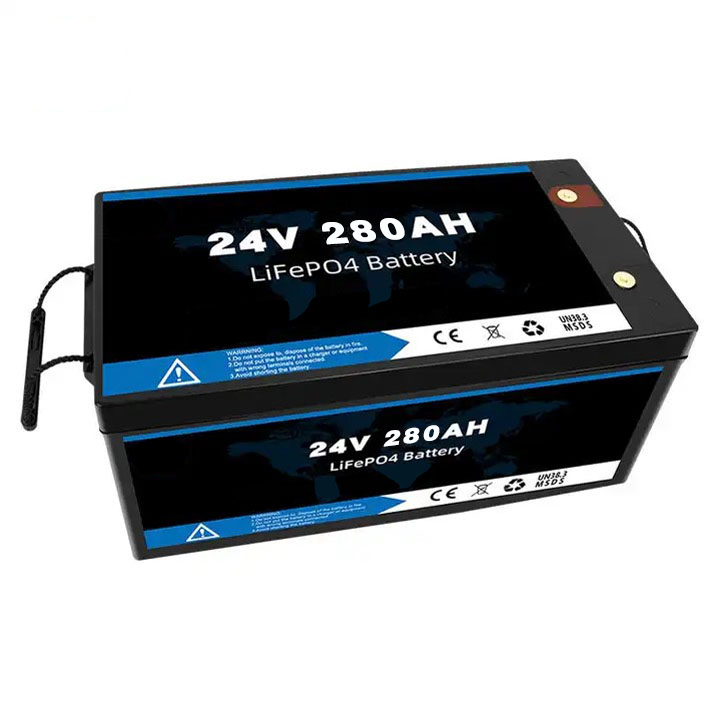
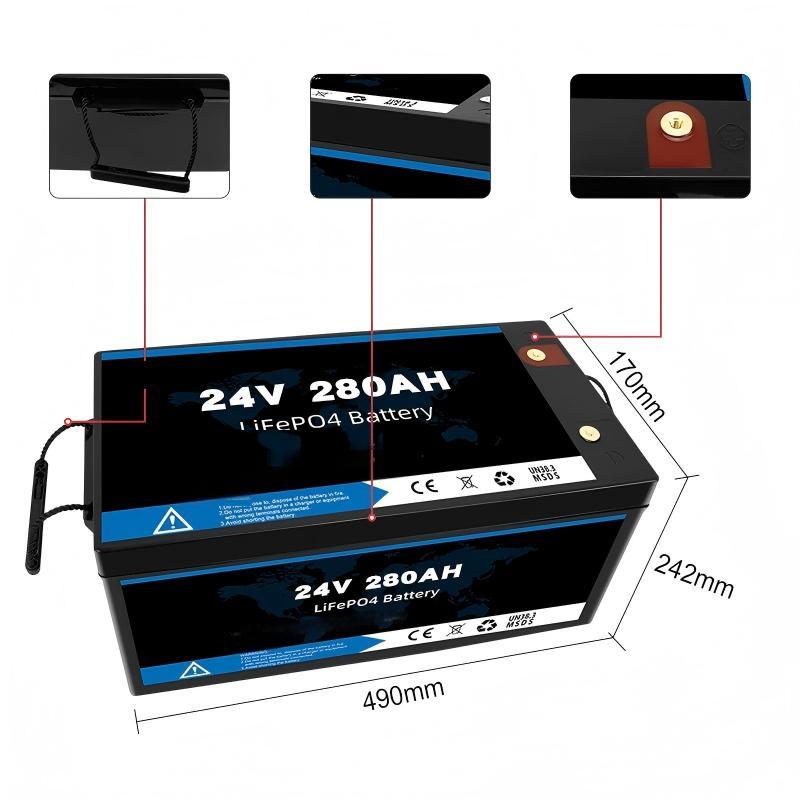
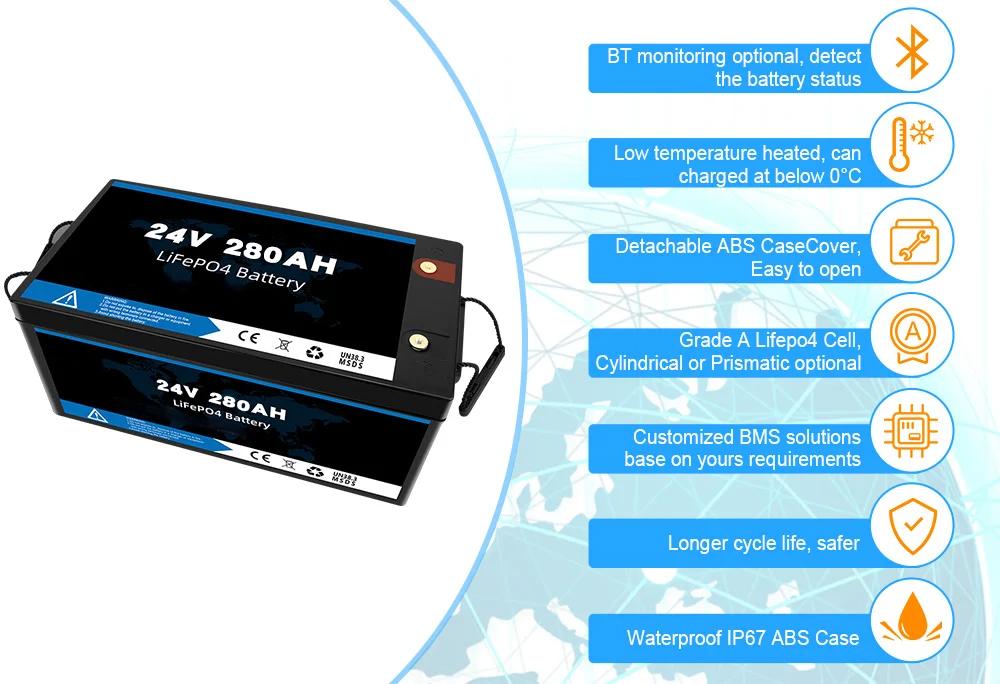
An in-depth article about the 24V 280Ah LiFePO4 battery, its manufacturing, market trends, and applications:
Understanding the 24V 280Ah LiFePO4 Battery
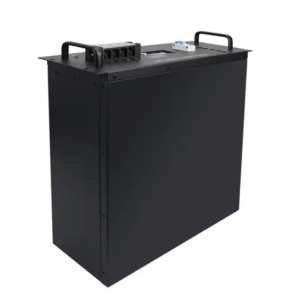
The 24V 280Ah LiFePO4 battery is a high-capacity, deep-cycle rechargeable battery pack built with Lithium Iron Phosphate (LiFePO4) chemistry. This specific configuration represents a powerful energy storage solution, increasingly popular across various industries due to its superior performance characteristics compared to traditional lead-acid batteries.
Key Specifications:
- Voltage (24V): The nominal voltage of the battery pack is 24 volts. This is achieved by connecting individual LiFePO4 cells (which typically have a nominal voltage of 3.2V) in series. In this case, eight cells (8*3.2V=25.6v, often rounded to 24V) are generally connected in series.
- Capacity (280Ah): The battery can deliver a current of 280 ampere-hours (Ah). This means it can theoretically supply 280 amps for one hour, or 28 amps for ten hours, or 1 amp for 280 hours, before needing a recharge.
- Energy (6.72 kWh): The total energy stored is approximately calculated as Voltage * Capacity (24V*280ah=6.72kwh, or 6.72kwh).
Why LiFePO4?
Lithium Iron Phosphate is a subset of lithium-ion chemistry that offers significant advantages:
1. Safety: LiFePO4 is known for excellent thermal and chemical stability, making it inherently safer than other lithium-ion chemistries (like NCA or NCM). They are highly resistant to thermal runaway.
2. Long Cycle Life: These batteries can endure thousands of charge/discharge cycles (often 3,000 to 8,000+), translating to a longer service life and better long-term return on investment.
3. Lightweight: They are significantly lighter than lead-acid batteries of equivalent capacity.
4. Performance: They offer a high rate of charge and discharge (high C-rate), allowing for fast charging and the delivery of high bursts of power.
How are 24V 280Ah LiFePO4 Batteries Manufactured?
The manufacturing process for a 24V 280Ah LiFePO4 battery pack is a multi-stage process that combines cell production with battery pack assembly.
1. LiFePO4 Cell Manufacturing:
The process starts with producing the individual 3.2V cells (often in prismatic or pouch formats):
- Electrode Preparation: Active materials (LiFePO4 for the cathode, graphite for the anode), conductive additives, and a binder are mixed into slurries. These slurries are coated onto aluminum foil (cathode) and copper foil (anode) current collectors.
- Drying and Cutting: The coated electrodes are dried, calendered (pressed to a specific thickness), and then cut into precise sizes.
- Cell Assembly: A separator (a polymer film that prevents short-circuiting) is placed between the cathode and anode. These layers are stacked or wound and sealed within a cell casing (e.g., aluminum casing for prismatic cells).
- Electrolyte Filling: A non-aqueous electrolyte is injected into the cell casing.
- Sealing and Formation: The cell is sealed. The initial charge/discharge cycles (known as the “formation” process) activate the electrode materials and form a Stable Solid Electrolyte Interphase (SEI) layer, which is crucial for cell performance and longevity.
- Grading and Sorting: Cells are tested for capacity, internal resistance, and voltage, then graded and sorted to ensure only matching, high-quality cells are used in the final battery pack.
2. Battery Pack Assembly (The 24V 280Ah Pack):
This is where the individual cells are integrated into the final 24V 280Ah configuration:
- Series/Parallel Connection: To achieve the 24V(nominal) and 280Ah rating, eight 3.2V cells of 280Ah capacity are connected in series (8S). If 140Ahcells were used, they would be connected as 8S2P(eight in series, two in parallel). The cells are connected using high-current conductors (busbars) via welding (often laser or ultrasonic).
- BMS Integration: A critical component, the Battery Management System (BMS), is installed. The BMS monitors cell voltage, temperature, and current; balances the cell charges; and protects the battery from overcharging, over-discharging, and short-circuiting.
- Housing and Protection: The connected cells and the BMS are enclosed in a rugged battery case (often metal or high-impact plastic) designed for the application environment. Proper thermal management components are added if required.
- Final Testing: The completed battery pack undergoes rigorous quality control and performance testing, including capacity testing, vibration resistance, and safety checks, before shipping.
Trends and Applications of the 24V 280Ah LiFePO4 Battery
Market Trends:
The market for the 24V 280Ah LiFePO4 battery is driven by several key trends:
1. Energy Transition:The global push for renewable energy sources (solar and wind) necessitates efficient energy storage. This battery capacity fits perfectly into residential and commercial ESS (Energy Storage Systems).
2. Electric Mobility: While larger packs are used in full EVs, 24V systems are highly utilized in smaller electric vehicles like low-speed electric cars, forklifts, golf carts, and material handling equipment, replacing lead-acid counterparts.
3. Price Parity: Ongoing advancements and economies of scale in manufacturing are steadily driving down the price of LiFePO4, making the cost-per-cycle competitive with, and often superior to, traditional batteries.
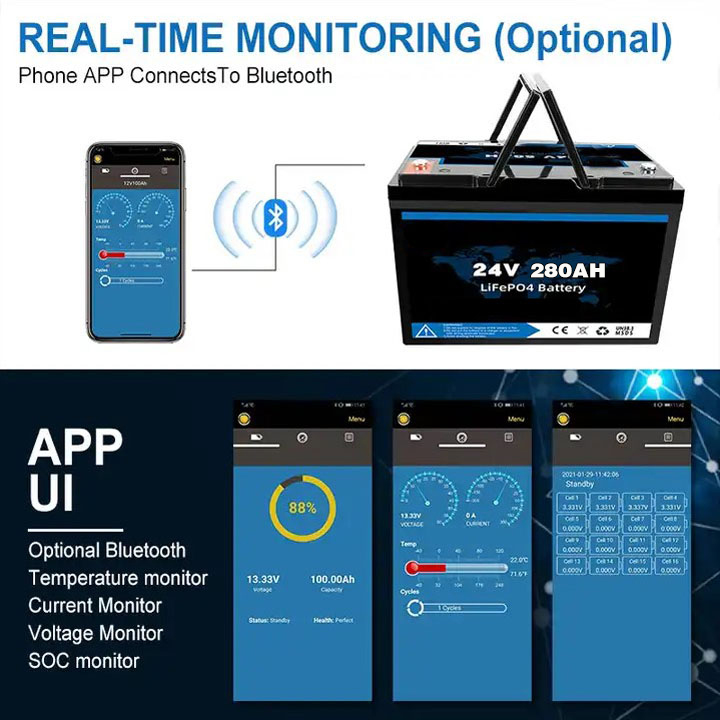
4. Smart Battery Systems: Integration of sophisticated BMS and communication protocols (e.g., CAN bus, RS485) allows the battery to communicate its status to external equipment, enhancing efficiency and predictive maintenance.
Where Will These Batteries Be Used?
The 24V 280Ah LiFePO4 battery’s balance of moderate voltage and high capacity makes it ideal for several high-power, deep-cycle applications:
- Marine and RV Power: It serves as a primary house battery in boats and recreational vehicles (RVs). Its light weight, compact size, and high energy density allow for extended off-grid stays and reliable power for appliances, air conditioners, and other high-draw devices.
- Off-Grid and Hybrid Solar Systems: It is a core component for solar energy storage in smaller homes or cabins, storing solar power generated during the day for use at night or during blackouts. The 24V system is often paired directly with matching solar charge controllers and inverters.
- Uninterruptible Power Supplies (UPS): For data centers, hospitals, and critical infrastructure, these batteries provide reliable, instantaneous backup power, offering a lighter and longer-lasting alternative to lead-acid batteries.
- Industrial Equipment: It powers material handling vehicles like forklifts, aerial work platforms (AWPs), and floor cleaning machines, where fast charging and maintenance-free operation significantly reduce downtime.
- Telecommunications: It provides backup power for cellular towers and remote communication equipment, where long life and minimal maintenance are essential.
In summary, the 24V 280Ah LiFePO4 battery is a high-performance energy solution defined by its safety, longevity, and efficiency. Its manufacturing relies on precise cell production and sophisticated pack assembly, with the integrated BMS being a critical element. Driven by global trends in renewable energy and electric mobility, these batteries are poised to become the standard for reliable, high-capacity 24V power systems across residential, industrial, and specialized vehicle applications.
Basic Parameters
| 24V 280AH LiFePO4 Battery Specifications | |
| Item | LiFePO4 battery Basic Parameters |
| MODEL | B-24280 |
| Nominal voltage | 25.6V |
| Nominal Capacity | 280Ah |
| Nominal energy | 7168Wh |
| Life Cycles | 4000+ (80% DoD for effectively lower total of ownership cost) |
| Recommended Charge Voltage | 29.2V |
| Recommended Charge Current | 20.0A |
| End of discharge voltage | 20.0V |
| Charge Temperature | -0 ~ +45 ℃ |
| Discharge Temperature | -20 ~ +60 ℃ |
| Storage Temperature | -0 ~ +40 ℃ |
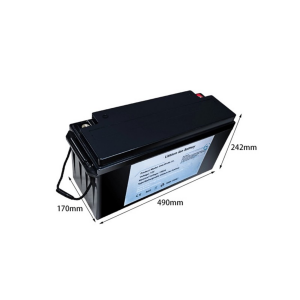
| Dimension (L/W/H) | 482x490x222 mm |
| MOQ | 2 Pieces |
| OEM/ODM | YES |
| Shipping | DHL, UPS, FEDEX or Sea Shipping or Special line |
| Application | Electric Vehicles (EVs); Energy Storage Systems (ESS); Portable Electronics; Backup Power Solutions; Renewable Energy Integration; Off-Grid Power Systems; Marine and RV Applications; Industrial and Commercial Applications |
Reviews
There are no reviews yet.